Stay informed with our newsletter.
.webp)


EN





The global food and beverage industry is entering a clean-label revolution as major companies move away from artificial colours. Nestlé’s plan to remove artificial food colourings from its global product portfolio by the end of 2026 reflects growing consumer demand for simpler, more transparent ingredients. With regulators, parents, and health-conscious shoppers pushing for change, brands are reformulating products to build trust, improve transparency, and stay competitive in a rapidly evolving packaged food market.
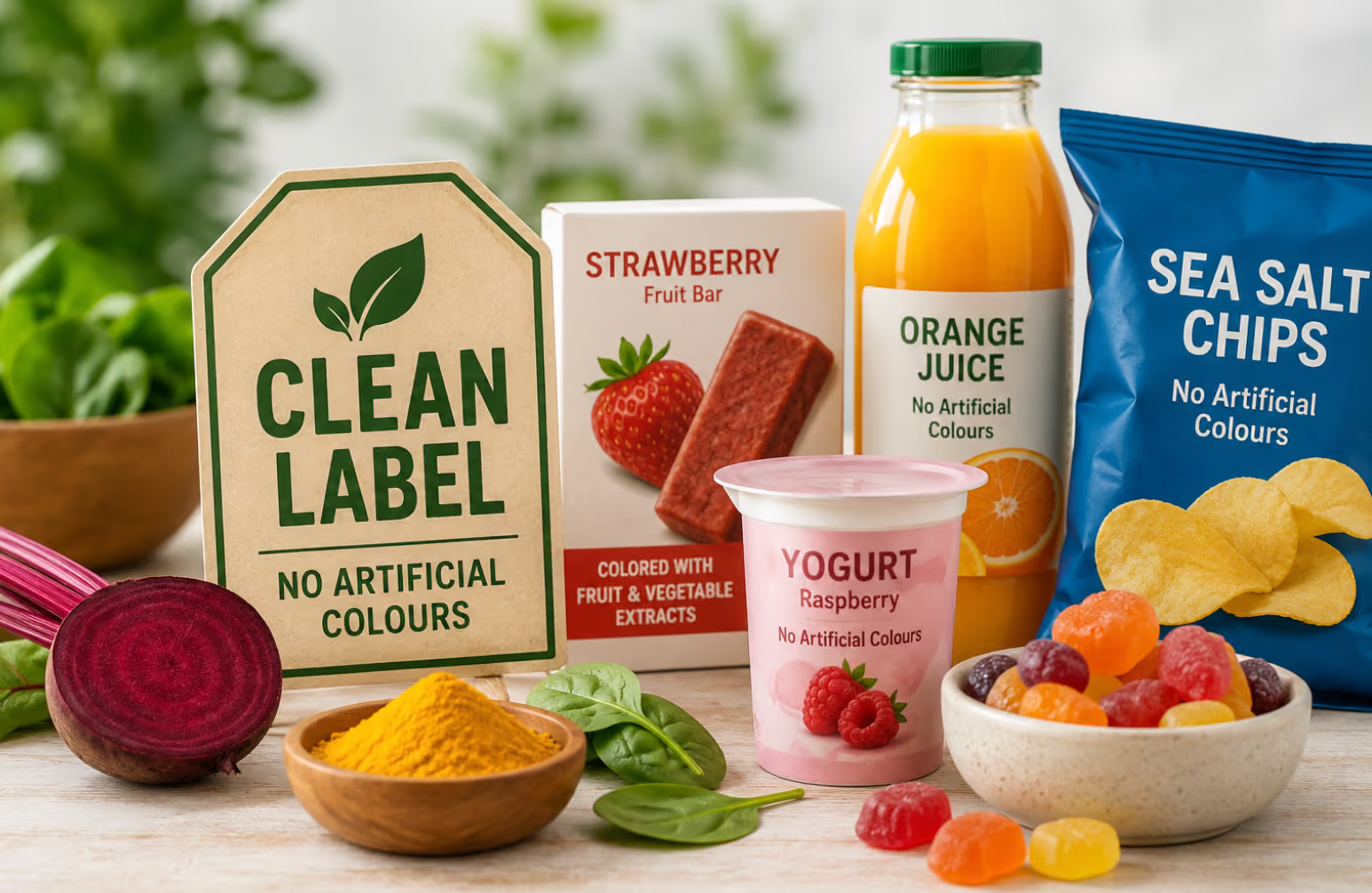
The global food and beverage industry is entering a new era where colour, transparency, and consumer trust are becoming as important as taste, price, and convenience. For decades, artificial food colours helped brands make cereals brighter, candies more exciting, beverages more attractive, and packaged snacks more visually consistent. But in 2026, the industry is moving in a different direction. The new competitive advantage is no longer just about how food looks on the shelf, but how clearly brands can explain what is inside it.
A major turning point came when Nestlé announced plans to remove artificial food colourings from all its products worldwide by the end of 2026. According to Reuters, the move would make Nestlé the first major food company to take such a broad global step, extending earlier efforts beyond the United States and into its full international portfolio.
This is more than a corporate reformulation decision. It marks the rise of a wider clean-label revolution, where consumers are increasingly questioning artificial additives, demanding simpler ingredient lists, and pushing food companies to reformulate products that have remained largely unchanged for years.
Artificial colours have long been used in processed foods because they are stable, affordable, bright, and consistent. They help products look the same across markets and production batches. However, growing public scrutiny has changed how consumers view them. Many shoppers now associate synthetic dyes with ultra-processed food, unnecessary additives, and potential health concerns, especially in products aimed at children.
In the United States, regulatory pressure has intensified. In January 2025, the U.S. Food and Drug Administration revoked authorization for FD&C Red No. 3 in food and ingested drugs. Food manufacturers have until January 15, 2027 to reformulate foods containing the dye, while makers of ingested drugs have until January 18, 2028.
The FDA has also been tracking food industry pledges to remove petroleum-based food dyes, noting concerns from parents and doctors about dyes that provide no nutritional benefit. The agency has encouraged industry action as part of a broader effort to improve children’s eating patterns and reduce exposure to unnecessary additives.
This regulatory momentum is not limited to the U.S. In Europe, food colours must be clearly declared on labels by name or E-number, and some synthetic colours require warning language related to children’s activity and attention. This has already pushed many global brands to use different recipes across different regions.
Nestlé’s decision is significant because of its scale. The company operates across categories such as confectionery, dairy, beverages, nutrition, frozen foods, and prepared meals. Removing artificial colours across a global portfolio is not as simple as replacing one ingredient with another. Natural colours can behave differently depending on heat, light, acidity, packaging, shelf life, and local supply availability.
For example, a red shade that works in a chilled dairy product may not perform the same way in a baked snack or a powdered beverage. Natural pigments such as beetroot, paprika, turmeric, spirulina, carrot, and berry extracts can be more sensitive to processing and storage conditions. They may also influence taste, cost, or appearance if not carefully balanced.
That is why this reformulation wave requires serious investment in food science, ingredient sourcing, sensory testing, and supply chain planning. Reuters reported that Nestlé’s leadership highlighted the challenge and investment required to test natural alternatives and ensure product quality, shelf life, and consumer acceptance.
The bigger message is clear: clean-label reformulation is no longer a niche trend. It is becoming a mainstream business priority for multinational food companies.
Nestlé is not alone. Several major companies have already announced artificial dye phaseouts, especially in the United States. Kraft Heinz said it will not launch new U.S. products with FD&C colours and will remove remaining FD&C colours from its U.S. portfolio before the end of 2027. The company also said nearly 90% of its U.S. products were already free of FD&C colours by net sales.
General Mills has also announced plans to remove certified colours from all U.S. cereals and all K-12 school foods by summer 2026, with the full U.S. retail portfolio targeted by the end of 2027. The company said 85% of its U.S. retail portfolio was already made without certified colours.
These commitments show that clean-label reformulation is moving from specialist health-food brands into the heart of mainstream packaged foods. Products that once relied heavily on bright synthetic colours are being redesigned for a consumer base that wants recognizable ingredients, simpler labels, and greater transparency.
The clean-label movement is being powered by a major shift in consumer behaviour. Shoppers are reading labels more closely, comparing ingredient lists, and questioning why products need artificial colours at all. For younger consumers, especially Gen Z and Millennials, food choices are increasingly tied to personal wellness, social values, and trust in brands.
Market research also points to strong commercial momentum. Fortune Business Insights estimates that the global clean-label ingredients market was valued at USD 44.97 billion in 2025 and is projected to grow from USD 47.91 billion in 2026 to USD 83.44 billion by 2034, at a CAGR of 7.18%.
Mordor Intelligence offers a similar outlook, estimating the clean-label ingredient market at USD 51.47 billion in 2026, with growth expected to reach USD 70.36 billion by 2031.
This growth reflects a simple reality: clean-label is no longer just a health claim. It is becoming a brand trust strategy.
While the clean-label shift is popular with consumers, it is not easy for manufacturers. Artificial colours are often cheaper, stronger, and more stable than natural alternatives. Replacing them can increase costs, complicate sourcing, and require changes to packaging, production, and quality control.
There is also the challenge of consumer expectation. A cereal, candy, drink, or snack may look different after reformulation. Brands must manage the transition carefully so consumers do not assume that a less intense colour means weaker taste or lower quality. In many cases, companies may need to educate shoppers that slightly softer colours can be part of a healthier, more transparent product design.
The removal of artificial colours is part of a much larger movement toward simpler, cleaner, and more accountable food production. The same forces driving dye removal are also shaping demand for reduced sugar, lower sodium, natural flavours, plant-based ingredients, functional nutrition, and sustainable sourcing.
For food giants, the message is clear: reformulation is no longer just a compliance exercise. It is a competitive necessity. Brands that move early can position themselves as transparent, responsible, and consumer-focused. Brands that delay may face increasing pressure from regulators, retailers, parents, health advocates, and younger consumers.
The clean-label revolution is not about removing colour from food. It is about removing doubt from the consumer relationship. As Nestlé, Kraft Heinz, General Mills, and others race to eliminate artificial colours, the packaged food industry is being forced to rethink one of its oldest assumptions: that brighter is always better.
In the new food economy, the strongest brands may not be the ones with the most eye-catching colours, but the ones with the clearest labels, credible science, and highest consumer trust.
For questions or comments write to contactus@bostonbrandmedia.com


-v3.jpg)


-v3-02.jpg)