Stay informed with our newsletter.
.webp)


EN





FIFA's World Cup continues to generate billions in revenue, but growing concerns surround the financial burden placed on host cities, taxpayers, and fans. Rising costs for stadium construction, transportation upgrades, security, and event operations have sparked criticism over public spending and affordability. While FIFA highlights economic growth, tourism, and global exposure, critics question whether the benefits justify the expense. The debate underscores the need for greater accountability, sustainability, and fair distribution of tournament-related costs.
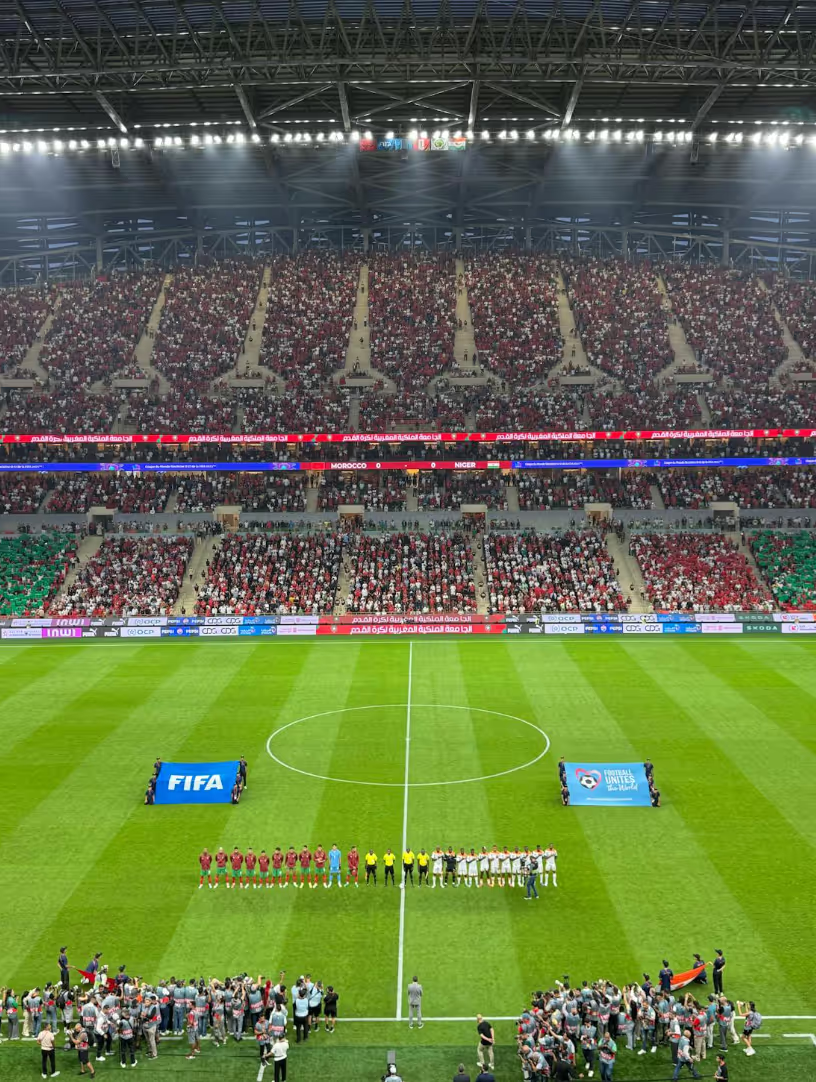
The FIFA World Cup is often celebrated as the pinnacle of international football, bringing together billions of viewers and generating excitement across continents. Yet behind the spectacle of packed stadiums, global television audiences, and sponsorship deals lies a growing debate about the true cost of hosting the world's most popular sporting event. As FIFA projects that its expanded tournaments could generate more than $13 billion in revenue, critics argue that many of the associated costs are increasingly being shifted onto local taxpayers, host cities, and fans.
The controversy has intensified ahead of recent and upcoming World Cup events, with economists, urban planners, and public policy experts questioning whether the economic benefits promoted by FIFA justify the substantial investments required from host nations.
FIFA has transformed the World Cup into one of the most lucrative sporting events in history. Revenue streams include broadcasting rights, sponsorship agreements, hospitality packages, licensing deals, and ticket sales. During the 2022 World Cup in Qatar, FIFA reported revenues exceeding $7.5 billion, setting a new record for the organization.
With the expansion of the tournament to 48 teams, FIFA expects future editions to generate even greater revenues. Industry analysts estimate that the combined commercial value of upcoming tournaments could exceed $13 billion, driven by larger audiences, more matches, and expanded sponsorship opportunities.
However, while FIFA collects much of the event's direct revenue, host governments often shoulder the majority of infrastructure and operational costs.
Hosting a World Cup requires enormous investments in stadiums, transportation networks, security systems, airports, and public services. While FIFA typically contributes organizational expertise and event management, local authorities are often responsible for funding and maintaining critical infrastructure.
Many cities view hosting rights as an opportunity to accelerate development and attract international attention. Yet evidence from previous tournaments suggests that projected economic gains do not always materialize.
For example, the 2014 World Cup in Brazil reportedly cost more than $11 billion, making it one of the most expensive tournaments ever staged. Several stadiums built specifically for the event later became underutilized, leading critics to label them "white elephants", expensive facilities with limited long-term value.
Similarly, South Africa invested billions in preparation for the 2010 World Cup, but some economists later argued that the anticipated tourism and economic benefits fell short of expectations.
These experiences have fueled skepticism about whether taxpayers should bear such significant financial burdens for events that primarily benefit FIFA and commercial partners.
One of the largest hidden costs associated with major sporting events involves public transportation systems. Host cities are often required to upgrade transit infrastructure, expand capacity, and operate extended services to accommodate millions of visitors.
While these improvements can create long-term benefits, critics argue that the costs are increasingly being transferred to residents through higher taxes, increased fares, or reduced funding for other public services.
In several host cities preparing for international sporting events, transit agencies have warned about mounting operational expenses linked to security requirements, staffing, maintenance, and crowd management.
Experts note that transportation investments are most beneficial when integrated into broader urban planning strategies. However, projects rushed to meet tournament deadlines can result in budget overruns and long-term financial strain.
The challenge lies in balancing the demands of a global sporting spectacle with the everyday needs of local commuters.
Beyond taxpayers, football supporters themselves are facing rising costs.
Attending a modern World Cup has become increasingly expensive due to higher ticket prices, accommodation costs, transportation fees, and hospitality packages. International fans often spend thousands of dollars on flights, hotels, local travel, and match tickets.
The expansion of premium seating categories and VIP experiences has generated significant revenue for FIFA and commercial partners. However, some supporters argue that the tournament is becoming less accessible to ordinary fans.
Consumer advocacy groups have pointed to rising costs as evidence of the growing commercialization of football. They argue that a sport traditionally associated with working-class communities is increasingly being transformed into a luxury entertainment product.
For many supporters, the dream of attending a World Cup now requires substantial financial resources, limiting participation to wealthier travelers and corporate clients.
Perhaps the most contentious issue surrounding World Cup hosting is the role of public funding.
Supporters of hosting bids argue that infrastructure investments create jobs, stimulate tourism, and leave lasting economic legacies. New transportation systems, upgraded airports, and modernized urban facilities can improve quality of life long after the tournament ends.
Critics, however, contend that many projected benefits are overstated.
Economic studies examining previous mega-events frequently find that actual tourism gains are lower than forecasted and that employment boosts are often temporary. Furthermore, funds allocated to sporting events may divert resources away from healthcare, education, housing, or other public priorities.
This has led to increasing public scrutiny of government commitments to large-scale sporting events. In several countries, citizens have protested against public spending related to tournament preparations, demanding greater transparency and accountability.
The question remains whether hosting a World Cup represents a strategic investment or an expensive prestige project.
FIFA maintains that the World Cup delivers substantial economic and social benefits. The organization highlights increased tourism, global media exposure, job creation, and infrastructure development as key advantages for host nations.
According to FIFA, hosting the tournament can boost international visibility, attract foreign investment, and enhance a country's global reputation.
The organization also points to community development programs, grassroots football initiatives, and sustainability efforts designed to create positive long-term impacts.
Supporters argue that evaluating the World Cup solely through financial metrics overlooks broader benefits such as national pride, cultural exchange, and international cooperation.
For many host countries, the tournament serves as a platform to showcase their achievements and strengthen their position on the world stage.
Another growing concern is the environmental impact of mega sporting events.
Large-scale construction projects, international travel, and increased energy consumption contribute significantly to carbon emissions. Environmental groups have called for stricter sustainability standards and greater transparency regarding the ecological footprint of future tournaments.
As climate change becomes a more pressing global issue, host cities face increasing pressure to demonstrate that infrastructure investments are environmentally responsible and economically sustainable.
Future World Cups may be judged not only by their sporting success but also by their ability to minimize environmental costs and maximize public value.
The debate surrounding World Cup costs reflects a broader discussion about the future of global mega-events. As tournaments grow larger and more commercially successful, questions about who pays and who benefits are becoming increasingly important.
The upcoming generation of World Cups will likely generate record-breaking revenues for FIFA and its commercial partners. Yet public support may depend on whether organizers can demonstrate clear benefits for local communities, taxpayers, and fans.
For many observers, the challenge is not the existence of the World Cup itself but ensuring that its economic rewards are distributed more fairly.
As football continues to unite billions of people around the world, stakeholders must find ways to balance commercial success, public accountability, fan accessibility, and long-term sustainability. Without such balance, the backlash against rising World Cup costs is likely to intensify, placing increasing pressure on FIFA and future host nations to rethink how the world's biggest sporting event is financed.
For questions or comments write to contactus@bostonbrandmedia.com



-v3.jpg)


-v3-02.jpg)