Stay informed with our newsletter.
.webp)


EN





Raising children in the age of screens is a complex balancing act for modern parents. With growing reliance on digital devices for education, entertainment, and daily support, families are navigating both opportunities and risks. From rising screen time and short-form content to the emergence of AI tools, parenting today requires mindful choices. Increasingly, parents are focusing not just on limiting screens, but on guiding healthy usage and modeling responsible digital behavior for their children.
The question of how to raise children in a hyper-connected world has quickly become one of the defining parenting challenges of our time. In 2025, screens are no longer just an optional part of childhood, they are woven into daily life. From online classrooms and educational apps to gaming consoles and short-form video platforms, digital devices serve as teachers, entertainers, and, at times, essential support systems for busy parents. The result is a complicated balancing act, where families are trying to harness the benefits of technology while minimizing its risks.
Recent data highlights just how embedded screens have become in parenting routines. Nearly half of parents, 49% - report relying on screen time every day to help manage their responsibilities. Whether it’s keeping a child occupied during work calls, long commutes, or household chores, screens have effectively become a modern-day coping mechanism. At the same time, children’s engagement with digital media is evolving rapidly. Gaming time has surged by 65% over the past four years, traditional television viewing continues to decline, and short-form video platforms such as TikTok and YouTube Shorts are dominating attention spans.
But the debate around screens is no longer just about how much time children spend in front of devices. Increasingly, it is about how, why, and under what circumstances that time is spent and what children are learning from it.
On one side of the conversation lies the undeniable educational potential of technology. Digital tools have transformed access to knowledge in ways that were unimaginable a generation ago. Children can now learn coding, explore science through interactive simulations, attend virtual classes, and access global information instantly. Educational apps are designed to adapt to individual learning speeds, making them particularly valuable for children who benefit from personalized instruction.
For many parents, especially in urban and working households, technology is not just helpful, it is essential. It allows children to stay academically engaged, develop digital literacy skills, and prepare for a future where technological competence is non-negotiable. In this sense, screen exposure is not inherently negative; in fact, it can be a powerful enabler when used intentionally.
However, this optimism is tempered by growing concerns about overexposure and its long-term effects.
A growing body of research suggests that excessive or unstructured screen time can impact children’s cognitive, emotional, and social development. One of the most significant findings comes from a landmark study published in JAMA Pediatrics, which revealed that parents’ own technology use in the presence of their children is associated with poorer cognition and social behavior outcomes in young kids. The study also found that children whose parents frequently used devices around them tended to have higher screen time themselves.
This insight shifts the conversation in a critical way. It is not just what children watch that matters—it is what they observe. Children learn behaviors through imitation, and when parents are constantly checking phones, scrolling through feeds, or multitasking with screens, they inadvertently model those habits.
The implications are profound. Reduced face-to-face interaction, fewer conversations, and less responsive parenting can affect language development, attention spans, and emotional regulation. In other words, screens are not just competing for children’s attention, they are reshaping the quality of family interactions.
Another emerging concern is the rise of short-form video content. Platforms that deliver rapid, bite-sized entertainment are particularly appealing to children, but they also raise questions about attention and focus. Unlike traditional TV shows or longer educational content, short-form videos are designed for quick consumption and constant novelty.
This format can make it harder for children to engage in sustained attention tasks, such as reading, problem-solving, or even playing imaginatively. Parents are increasingly aware of this shift, yet many find it difficult to counter, given how engaging and accessible these platforms are.
At the same time, the decline of traditional television suggests a broader transformation in how children consume media. The passive viewing experience is being replaced by interactive, algorithm-driven content that adapts to user preferences, often encouraging prolonged use.
Perhaps the most unprecedented development in this landscape is the introduction of artificial intelligence into children’s digital lives.
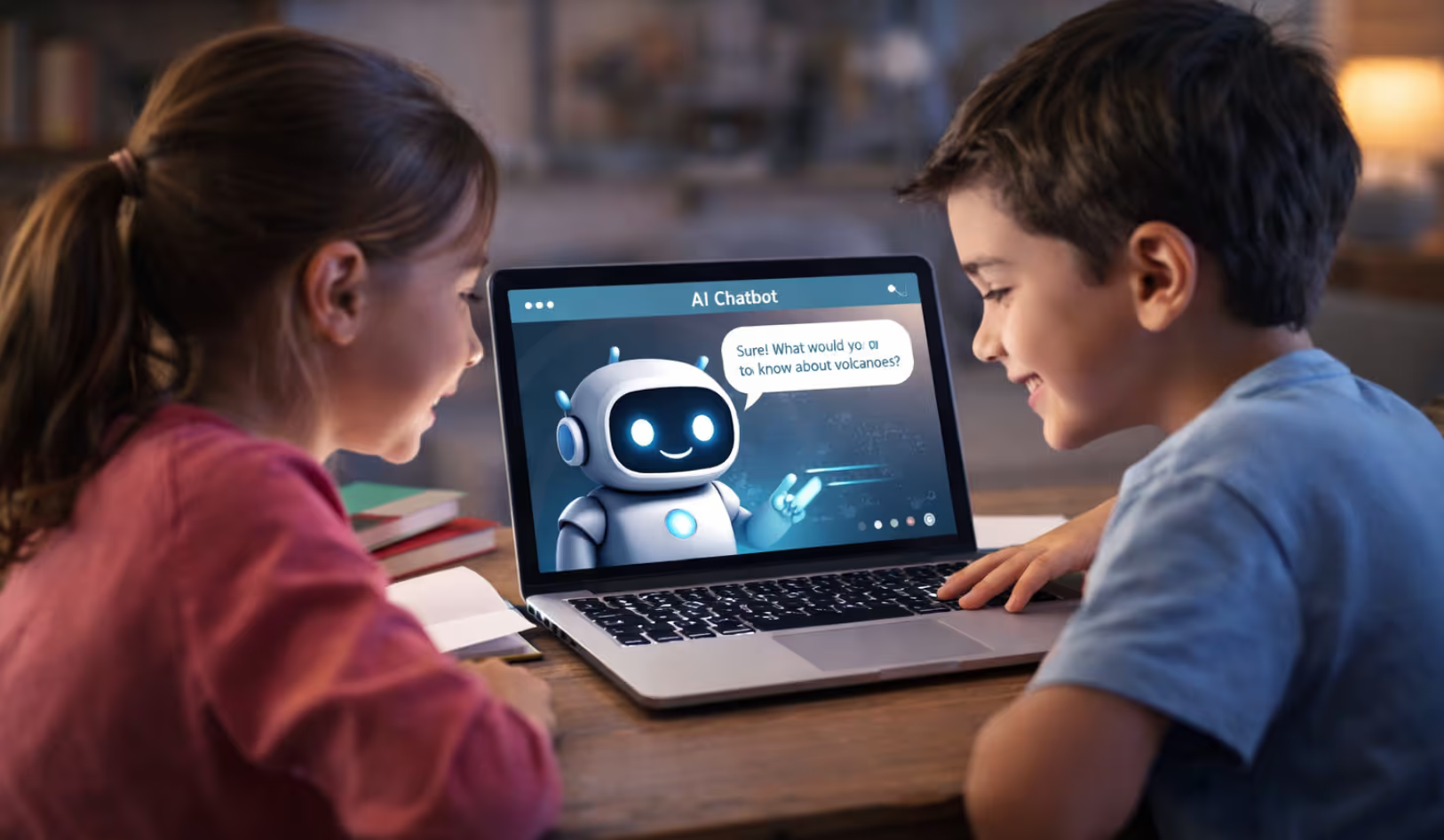
About one in ten parents with children aged 5 to 12 report that their kids are already using AI chatbots such as ChatGPT or Gemini. This marks a new frontier in parenting, one that no previous generation has had to navigate.
AI tools can serve as tutors, creative collaborators, and sources of instant information. They can help children with homework, answer questions, and even engage in conversations. However, they also raise important questions about accuracy, dependency, and critical thinking.
For example, how do children learn to verify information when answers are generated instantly? How do parents ensure that AI interactions are age-appropriate and aligned with family values? And perhaps most importantly, how do children distinguish between human and machine interaction in ways that support healthy social development?
These questions are still evolving, and parents are, in many ways, learning alongside their children.
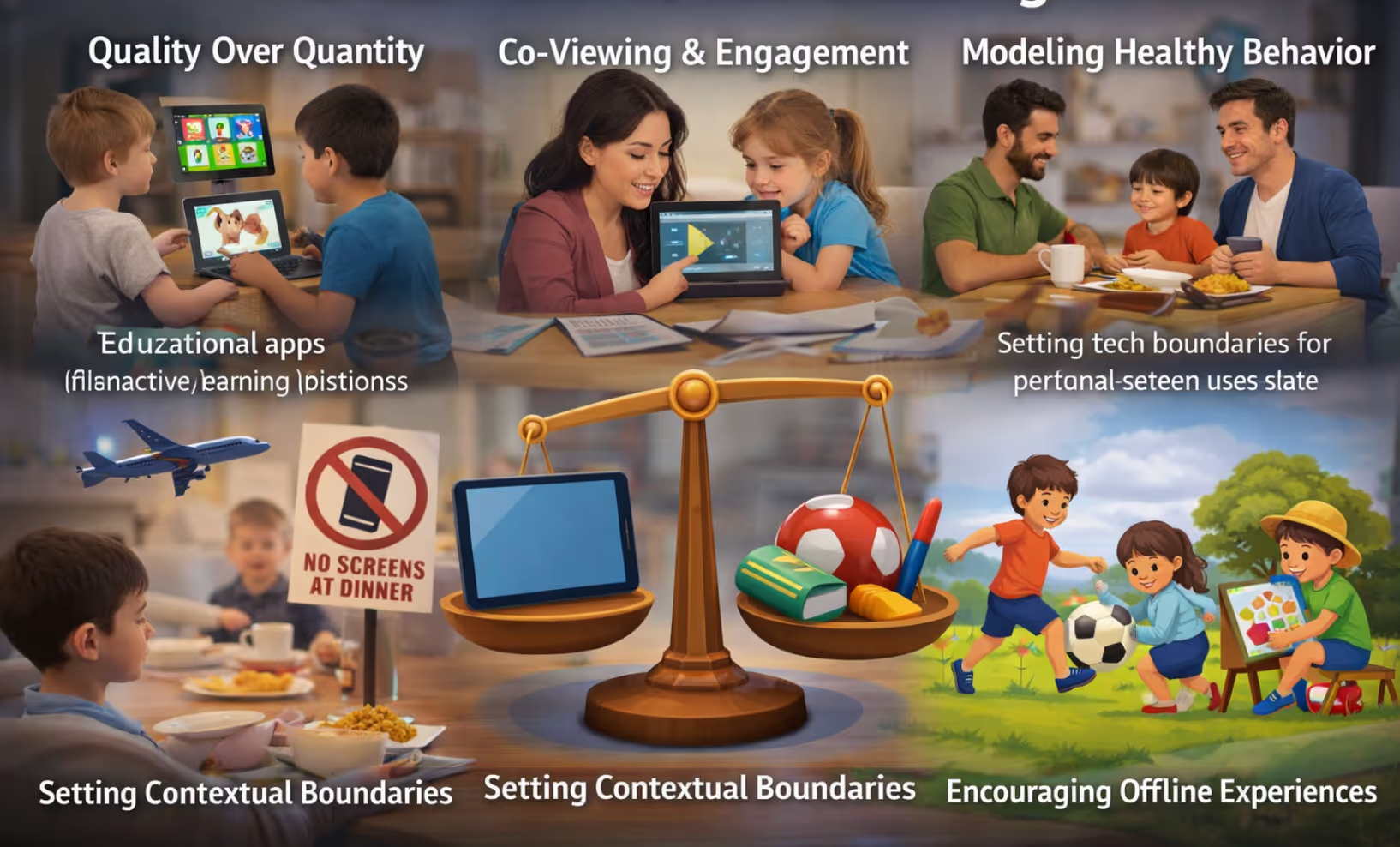
Amid these competing forces, parents are not simply choosing between “screens” and “no screens.” Instead, they are developing strategies to navigate a nuanced and ever-changing environment. Several key approaches are emerging:
1. Quality Over Quantity
Many parents are shifting focus from limiting total screen time to ensuring that the content children engage with is meaningful. Educational apps, interactive learning platforms, and creative tools are often prioritized over passive or purely entertainment-driven content.
2. Co-Viewing and Engagement
Rather than treating screens as a substitute for interaction, some parents are choosing to engage with their children during screen use, watching videos together, discussing content, or participating in digital activities. This helps maintain connection and reinforces learning.
3. Modeling Healthy Behavior
Recognizing the impact of their own habits, parents are increasingly mindful of how they use technology around their children. Setting boundaries for personal screen use, such as device-free meals or dedicated family time, can have a powerful influence.
4. Setting Contextual Boundaries
Instead of rigid rules, many families are adopting flexible guidelines based on context. For example, screens may be allowed during travel or specific times of day but restricted during meals, bedtime, or social interactions.
5. Encouraging Offline Experiences
Parents continue to value activities that promote physical movement, creativity, and social interaction, such as outdoor play, reading, arts, and unstructured playtime. These experiences are seen as essential counterbalances to digital engagement.
While much of the responsibility falls on parents, the broader ecosystem also plays a crucial role. Policymakers, educators, and technology companies are increasingly involved in shaping how children interact with digital media.
There is growing demand for age-appropriate design, stronger privacy protections, and tools that help parents manage screen use effectively. Educational institutions are also rethinking how technology is integrated into learning, aiming to maximize benefits while minimizing distractions.
At the same time, tech companies are under pressure to create platforms that prioritize well-being over engagement metrics, a shift that is easier said than done.
Raising children in the age of screens is not a problem with a single solution. It is an ongoing negotiation between opportunity and risk, convenience and intention, connection and distraction. Parents are, in many ways, pioneers, navigating uncharted territory without a clear roadmap.
What is clear, however, is that the conversation has moved beyond simple screen limits. It now encompasses the quality of interactions, the role of parental behavior, and the broader digital environment in which children are growing up.
In this complex landscape, what parents are ultimately banking on is balance: the ability to leverage technology as a tool for growth while preserving the human connections and experiences that are fundamental to healthy development.
For questions or comments write to contactus@bostonbrandmedia.com



-v3.jpg)


-v3-02.jpg)