Stay informed with our newsletter.
.webp)


EN





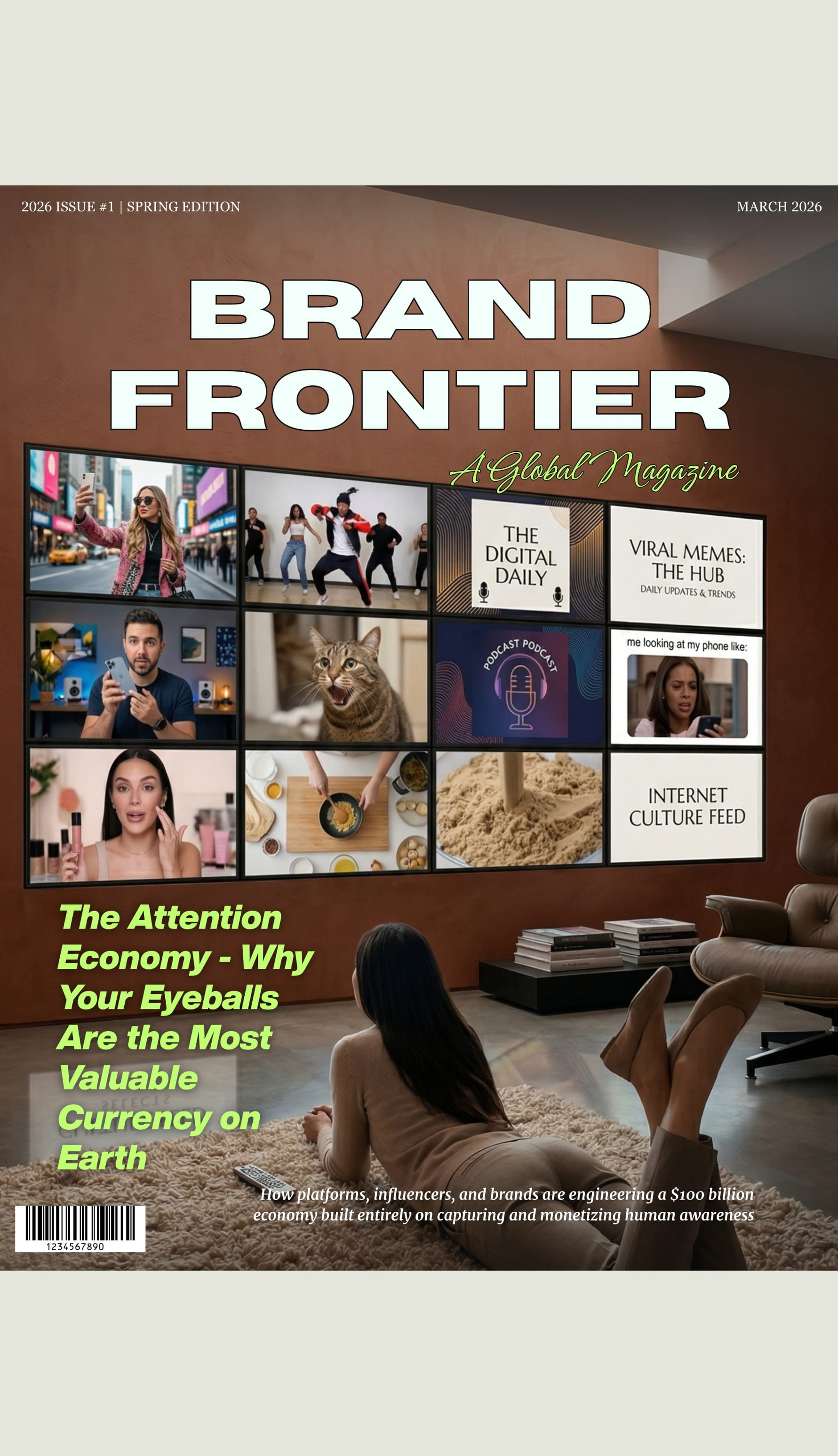
Media Mashups & Pop Culture Crossovers explores how attention has become the most valuable currency in today’s economy. From viral trends and memes to nostalgia-driven campaigns, the article explains how media moments shape consumer psychology faster than traditional research. It highlights why emotionally resonant storytelling outperforms rational messaging and shows how brands that decode cultural signals, rather than chase trends, gain deeper insight into audience values, behavior, and long-term loyalty.
In the modern economy, attention is no longer a by-product of success, it is the starting point. Before consumers trust a brand, before they buy a product, and long before they become loyal advocates, they must first notice. In an age of infinite content and shrinking focus, attention precedes trust and trust precedes revenue.
This is why media trends and pop culture crossovers have become powerful business signals. They reveal shifts in consumer psychology faster than surveys, focus groups, or quarterly reports ever could. Brands that understand how attention moves don’t just react to culture, they shape it.
Humans today are exposed to thousands of brand messages every single day. Algorithms curate what we see, platforms compete for minutes and seconds, and audiences scroll faster than ever. Research suggests the average human attention span has dropped to under eight seconds, making attention one of the scarcest resources in business.
In this environment, the most valuable brands are not always the loudest, they are the most culturally fluent. They know when to speak, where to appear, and how to blend seamlessly into conversations people are already having.
Media mashups, where brands intersect with entertainment, memes, music, sports, or internet culture, work because they don’t interrupt attention. They earn it.
One of the most reliable findings in media psychology is that nostalgia-driven campaigns outperform purely novelty-based ones. While new ideas grab curiosity, familiar emotional cues build comfort and trust.
Brands that tap into shared memories, childhood shows, retro music, classic games, or early internet culture, activate emotional familiarity. This doesn’t just spark recognition; it lowers cognitive resistance. Consumers feel understood before they even process the message.
Studies show that nostalgia-based advertising leads to:
This explains why reboots, remakes, retro branding, and throwback campaigns dominate media cycles. Nostalgia is not laziness, it’s psychology. It reassures consumers in uncertain times by reminding them of moments that felt stable, joyful, or simpler.
If nostalgia is slow-burning trust, virality is rapid-fire attention.
A single meme, short video, or pop culture moment can travel across continents in hours, shaping brand perception before leadership teams even notice it happening. Social platforms have collapsed the distance between content creation and global influence.
But virality is a double-edged sword.
Positive alignment with a trend can generate massive organic reach at a fraction of traditional marketing costs. Misjudging tone, context, or timing can just as quickly trigger backlash, ridicule, or reputational damage.
What makes viral culture powerful is also what makes it dangerous: speed without filters.
Brands that succeed here don’t simply jump on trends. They understand why a trend resonates, whether it taps into humor, frustration, identity, nostalgia, or collective emotion.
One of the most surprising findings in advertising research is that emotionally driven ads perform nearly twice as well as rational-only messaging, including in B2B contexts.
While logic justifies decisions, emotion initiates them.
Media and pop culture are emotional ecosystems. They influence how people feel before they influence what people think. This is why storytelling, music, visuals, humor, and symbolism consistently outperform feature-heavy messaging.
When brands collaborate with creators, filmmakers, musicians, athletes, or digital communities, they borrow emotional equity. They move from being sellers to being participants in culture.
And culture is where trust is built.
Media mashups aren’t just marketing tactics, they are strategic indicators.
When a brand aligns with a cultural moment, it signals:
This is especially important with younger demographics. Gen Z, in particular, evaluates brands not just on products, but on relevance, authenticity, and cultural intelligence. Brands that feel “out of touch” are dismissed quickly, often publicly.
On the other hand, brands that align naturally with cultural conversations often see significant organic reach boosts, driven by sharing rather than spending.
In the past, media interpretation was delegated to marketing teams. Today, media literacy is a leadership requirement.
Executives make strategic decisions that are instantly scrutinized, memed, clipped, and debated online. A comment made in a boardroom can become a viral headline within minutes.
Leaders who understand how narratives spread are better equipped to:
This doesn’t mean controlling the narrative, that’s no longer possible. It means participating thoughtfully in it.
Many brands fail not because they ignore trends, but because they chase them blindly.
Trend-chasing often results in:
Decoding trends, on the other hand, focuses on meaning rather than mimicry. It asks:
Leaders who ask these questions gain insight into customer motivations that no spreadsheet alone can provide.
Attention is not just about reach, it’s about relationship-building.
Short-term virality without trust fades quickly. Sustained attention, earned through cultural relevance and emotional resonance, compounds over time. It turns audiences into communities and customers into advocates.
The most successful brands don’t treat media as a megaphone. They treat it as a conversation.
In an era where content is infinite and attention is finite, the most valuable business skill is not trend adoption, it is cultural understanding.
The goal isn’t to go viral.
The goal is to understand why something goes viral and what it reveals about human behavior.
Leaders who decode media signals gain more than visibility.
They gain insight into customer values, fears, aspirations, and identities.
And in today’s economy, understanding attention is understanding power.
For questions or comments write to contactus@bostonbrandmedia.com



-v3.jpg)


-v3-02.jpg)