Stay informed with our newsletter.
.webp)


EN





As 2026 approaches, automakers face critical tariff decisions that could reshape the global automotive landscape. Changes in trade policies are expected to influence vehicle pricing, manufacturing locations, supply chains, and cross-border trade. With governments reassessing protectionist measures and regional trade agreements, the coming year will be pivotal for how carmakers plan investments, manage costs, and stay competitive in an increasingly complex and politically driven market.
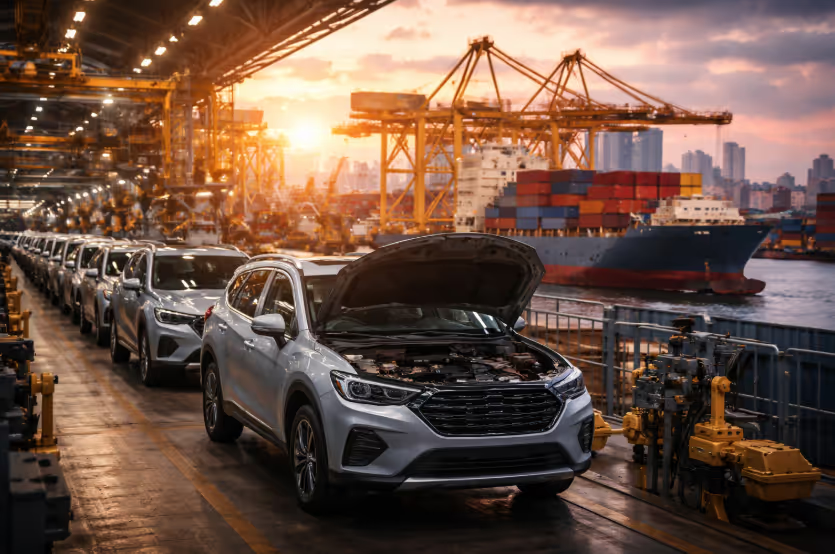
As 2026 unfolds, automakers around the world are bracing for what could be one of the most consequential tariff seasons in recent memory. Changes in trade policy - pushed by geopolitics, election-year politics, and fragile global supply chains are positioning the automotive industry at the centre of high-stakes economic, strategic, and competitive battles. From the United States to Mexico, the European Union to Asia, tariff decisions made this year will influence vehicle prices, where cars are built, and how automakers invest for the next decade.
Let’s break down what’s happening, what could change, and why it matters to companies, consumers, and even policymakers.
In 2025, the U.S. implemented sweeping tariffs on imported vehicles and auto parts, including a 25% levy on vehicles from Canada, Mexico, and elsewhere, a significant shift from historically low auto duties. Analysts expected some of these rates to continue into 2026, with potential tweaks depending on negotiations and trade strategy.
As 2026 begins, the big question is whether the U.S. will maintain, ease, or further adjust these tariffs:
For automakers, these outcomes are more than economic numbers, they determine where to build cars, where to invest, and how competitive their prices will be. High tariffs tend to drive localization (building more vehicles inside tariff-protected markets) but can raise consumer prices in the meantime.
At the very end of 2025, Mexico introduced a new schedule of tariffs, in some cases up to 35%, on imports from nations without free trade agreements, most notably China.
This decision has a two-fold impact:
Mexico’s tariff choices are widely interpreted as moves to support domestic industry and reinforce North American integration, especially given ongoing USMCA (United States-Mexico-Canada Agreement) reviews in 2026.
While the U.S. headlines often dominate tariff talk, Europe is facing its own looming automotive tariff dynamics:
This matters because the UK has become a prominent EV production hub and a tariff would immediately affect competitiveness on the Continent.
Beyond that, although some talks have occurred between the EU and China over tariff approaches, there’s no guarantee tariffs won’t return or be renegotiated, particularly on Chinese EVs and vehicles with subsidised input costs.
Tariffs don’t just affect prices - they trigger strategic reshuffles:
Such shifts ripple through dealership networks, labour planning, and even EV battery sourcing decisions, illustrating that tariffs influence much more than immediate sticker prices.
Automakers regularly warn that tariffs mean higher consumer prices. There’s growing evidence this is already happening:
For buyers, this means the cost of ownership in major markets may not go down unless tariffs ease or supply chains adapt drastically.
Tariffs are as much political tools as economic levers. In the U.S., 2026 is an election year, and trade policy rhetoric may harden or soften depending on political incentives. Dealmakers often push for tariff relief in the run-up to elections, but critics warn that sudden changes disrupt industries just as much as ongoing tariffs do.
Similarly, Mexico’s and the EU’s decisions reflect broader geopolitical imperatives: supporting domestic jobs, managing China’s industrial rise, and creating resilient manufacturing ecosystems.
Rather than hoping tariffs vanish, many firms are strategically repositioning:
These moves underscore a broader industry shift that sees tariffs not as short-term shocks, but as long-term operating realities.
So what should industry watchers expect as 2026 progresses?
✔ Tariffs likely stay at historically high levels in major markets, albeit with possible restructurings or relief measures.
✔ North American production and supply chains will continue adjusting to tariff costs. potentially reshaping future vehicle competitiveness.
✔ European markets will continue grappling with EV tariff barriers, especially between the UK and EU.
✔ Mexico’s tariff policy will increasingly influence global auto trade flows.
✔ Consumer prices remain under upward pressure until supply chain adjustments and tariff relief materialise.
In essence, 2026 is shaping up to be a pivotal year in automotive trade policy. Tariff decisions made now will shape not only how cars are priced, but where they are designed, engineered, and sold, defining the industry’s competitive contours for years to come.
Whether you’re an industry professional, investor, or a potential car buyer, the tariff landscape:
Even if you’re not watching tariffs daily, their effects, from price tags to factory footprints, will touch nearly every corner of the global automotive ecosystem.
For questions or comments write to contactus@bostonbrandmedia.com



-v3.jpg)


-v3-02.jpg)