Stay informed with our newsletter.
.webp)


EN





Kei cars, Japan’s ultra-compact and fuel-efficient vehicles, have gained approval under Trump-era policies, opening the door to potential entry into the U.S. market. While their affordability and efficiency appeal to urban drivers, questions remain about whether American consumers, accustomed to larger vehicles, will embrace their small size, limited power, and minimalist design despite rising fuel costs and sustainability concerns.
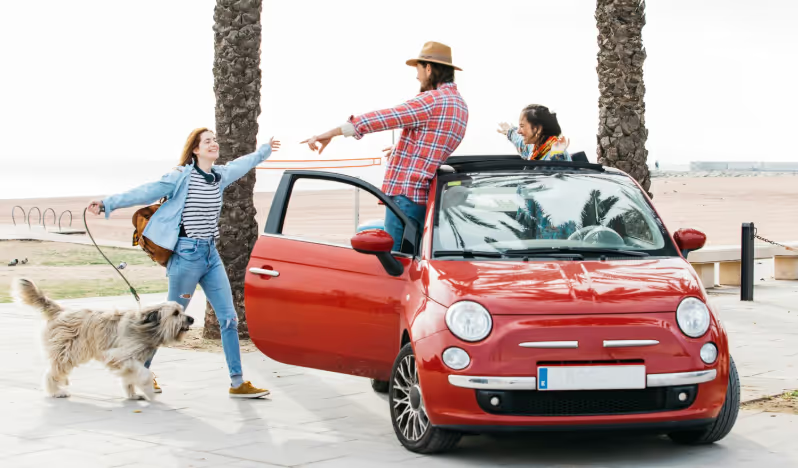
The United States has long been associated with oversized cars and towering SUVs, but Donald Trump has floated an idea that could challenge that identity. He has expressed interest in introducing ultra-compact vehicles to American roads, similar to the tiny hatchbacks and vans that dominate Japan’s streets, some no bigger than half a Ford F-150.
These vehicles, known as Kei cars, take their name from kei-jidōsha, meaning “light vehicle.” They emerged in post-war Japan as an affordable, practical solution for navigating dense urban areas and have since gained popularity across much of Asia. Their efficiency and compact design make them well-suited to crowded cities, though their appeal in a country as vast as the US remains uncertain.
While Trump has shown enthusiasm for micro-cars, many American importers and drivers are sceptical. Questions loom over whether manufacturers can keep prices low, meet strict safety standards, and persuade a nation accustomed to large vehicles to embrace downsizing.
After a visit to Japan, Trump announced online that he had approved tiny cars to be built in America, praising them as inexpensive, safe, fuel-efficient, and game-changing. His comments suggest a potential reversal of long-standing rules that have limited the production of very small vehicles in the US.
At present, Kei cars are rarely seen on American roads and are only legal if they are at least 25 years old. One enthusiast, Nevi Bergeron, purchased a bright yellow 1997 Suzuki Cappuccino after being inspired by Japanese street-racing manga. Small enough for two to fit in a single parking space, the car turns heads wherever it goes and brings her genuine joy behind the wheel.
Despite her affection for the tiny coupe, Bergeron admits it isn’t ideal for everyday use. Driving alongside large trucks on highways can feel unsettling, and safety is a constant concern. That vulnerability is echoed by other owners, including enthusiasts who treat their Kei cars like motorbikes, assuming they are often invisible to larger vehicles.
US transport officials have acknowledged these concerns, noting that micro-cars are unlikely to suit American freeways but could work well for city driving. For Trump, one of the biggest attractions is affordability. His administration has argued that smaller vehicles could give Americans more budget-friendly choices, whether electric or petrol-powered.
Still, doubts remain about whether US manufacturers can produce small cars more cheaply than existing sedans, especially as vehicle prices remain high following pandemic-related supply shortages. Rising living costs, tariffs, and reduced electric vehicle subsidies have added further pressure on buyers.
Some automakers are cautiously exploring the idea. Stellantis plans to introduce the ultra-small Topolino, while others, including Nissan and Mitsubishi, say they will assess demand. Major Japanese brands have so far stayed quiet.
Industry analysts are unconvinced. They argue modern Kei cars would struggle to meet US safety regulations without costly redesigns that erase their price advantage. Past attempts to sell small cars in America have largely failed, with brands like Smart withdrawing due to weak demand.
For now, Kei cars appear destined to remain a niche interest in the US, beloved by enthusiasts, useful in specific settings, and intriguing as a concept, but unlikely to dethrone America’s love affair with big vehicles anytime soon.
For questions or comments write to contactus@bostonbrandmedia.com
Source: BBC



-v3.jpg)


-v3-02.jpg)