Stay informed with our newsletter.
.webp)


EN





A hantavirus outbreak linked to an international cruise ship has prompted health monitoring efforts across multiple countries, including the United States, Europe, and Australia. Authorities are tracing passengers and advising healthcare providers to remain alert for symptoms associated with the rare but potentially severe virus. While experts emphasize there is currently no evidence of widespread human-to-human transmission or dangerous mutations, the incident has rapidly gained global attention due to growing public concern over infectious disease risks and international travel-related outbreaks.
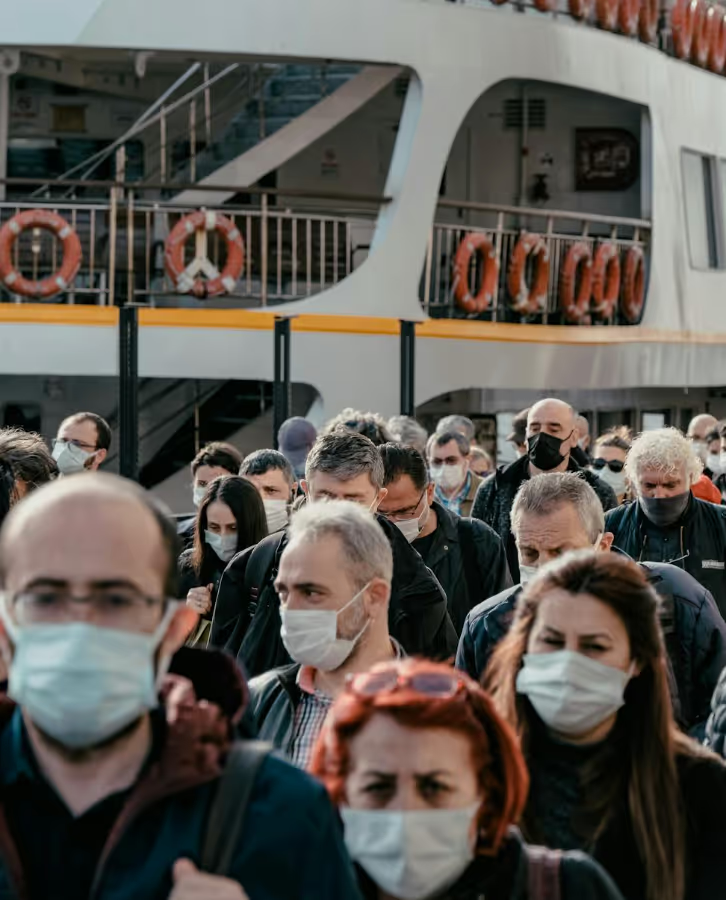
Global health authorities are intensifying surveillance efforts after a reported hantavirus outbreak linked to an international cruise ship sparked concerns across multiple countries. Passengers from the vessel have since dispersed internationally, prompting monitoring and precautionary measures in parts of Europe, Australia, and the United States. While experts stress that there is currently no evidence of widespread human-to-human transmission or viral mutation, the incident has quickly become one of the most discussed global health stories of the week.
The outbreak reportedly began after several passengers aboard a luxury cruise liner developed severe flu-like symptoms during the voyage. Medical investigations later identified suspected hantavirus infections among a small number of travelers, leading public health agencies to trace contacts and notify international health authorities.
Hantavirus refers to a family of viruses primarily transmitted to humans through exposure to infected rodents, especially through contact with rodent urine, droppings, or saliva. In rare cases, people can become infected by inhaling airborne particles contaminated with rodent waste.
The disease can lead to severe respiratory illnesses such as Hantavirus Pulmonary Syndrome (HPS), which has a mortality rate ranging from 30% to 40% in serious cases. Symptoms often begin with fever, fatigue, headaches, and muscle aches before rapidly progressing to breathing difficulties and lung complications.
Health experts emphasize that hantavirus outbreaks remain relatively rare compared to more common infectious diseases. However, the virus is considered highly dangerous because of the speed at which severe symptoms can develop once infection occurs.
What transformed this incident into a global concern was the international nature of cruise travel. The ship carried passengers from numerous countries, many of whom traveled onward to different destinations before the outbreak was fully recognized.
Authorities are now conducting contact tracing operations across several regions, with health departments in:
reportedly monitoring individuals who may have been exposed.
Several passengers were hospitalized for observation after displaying respiratory symptoms, though officials have not disclosed exact case numbers publicly. Cruise operators are also cooperating with health agencies to inspect onboard sanitation systems, food storage areas, ventilation systems, and possible rodent exposure points.
The World Health Organization (WHO) and multiple national public health agencies have issued precautionary guidance while urging the public to remain calm.
Importantly, experts say there is:
Nevertheless, authorities are taking the situation seriously because international travel can accelerate the spread of infectious diseases before detection systems fully activate.
The U.S. Centers for Disease Control and Prevention (CDC) reportedly advised healthcare providers to remain alert for patients presenting unexplained respiratory symptoms following recent cruise travel.
Australian and European health agencies have similarly enhanced monitoring procedures at ports, airports, and healthcare facilities.
The outbreak has rapidly gained global attention largely because memories of the COVID-19 pandemic remain fresh. Cruise ships were heavily associated with early COVID outbreaks, making any infectious disease incident aboard a vessel highly sensitive from a public perception standpoint.
Social media has amplified fears, with speculation spreading rapidly online regarding possible quarantines, mutations, and international travel restrictions. Public health experts have urged caution against misinformation, noting that the current situation is significantly different from the early stages of COVID-19.
Unlike highly contagious airborne viruses such as COVID-19 or influenza, hantavirus infections are typically linked to environmental exposure rather than routine person-to-person spread.
Medical researchers have also pointed out that most known hantavirus outbreaks historically occurred in rural or rodent-heavy environments rather than in urban settings or large population centers.
Investigators are currently examining several possible exposure scenarios onboard the ship. Preliminary reports suggest officials are exploring whether infected rodents may have contaminated storage areas, maintenance zones, or supply shipments.
Cruise ships, despite strict sanitation protocols, remain complex environments with extensive food storage facilities and cargo operations that can occasionally create vulnerabilities for pest infiltration.
Environmental testing and sanitation inspections are now underway to determine whether the virus originated onboard or whether infected passengers may have been exposed prior to boarding.
Health officials are advising recent passengers and close contacts to monitor for symptoms including:
Experts stress that early medical attention can significantly improve outcomes in severe cases.
For now, health agencies continue to emphasize preparedness rather than alarm. Surveillance systems activated after the COVID-19 pandemic have improved international coordination and rapid response capabilities, allowing authorities to quickly trace travelers and share information across borders.
While the hantavirus scare has undeniably triggered international concern, scientists maintain that the overall public risk remains low at this stage. Still, the incident serves as another reminder of how interconnected global travel systems can rapidly transform localized health events into worldwide headlines within hours.
For questions or comments write to contactus@bostonbrandmedia.com



-v3.jpg)


-v3-02.jpg)