Stay informed with our newsletter.
.webp)


EN





Gen Z is transforming fashion by prioritizing quality, affordability, durability and value over traditional status symbols. Younger shoppers increasingly examine fabrics, reviews and cost-per-wear while continuing to embrace accessible platforms such as Shein. At the same time, heritage brands including Coach and Ralph Lauren are gaining renewed popularity through nostalgia, timeless designs and social-media relevance. This shift shows that fashion’s future may belong to brands that combine authenticity, accessibility, craftsmanship and lasting value.
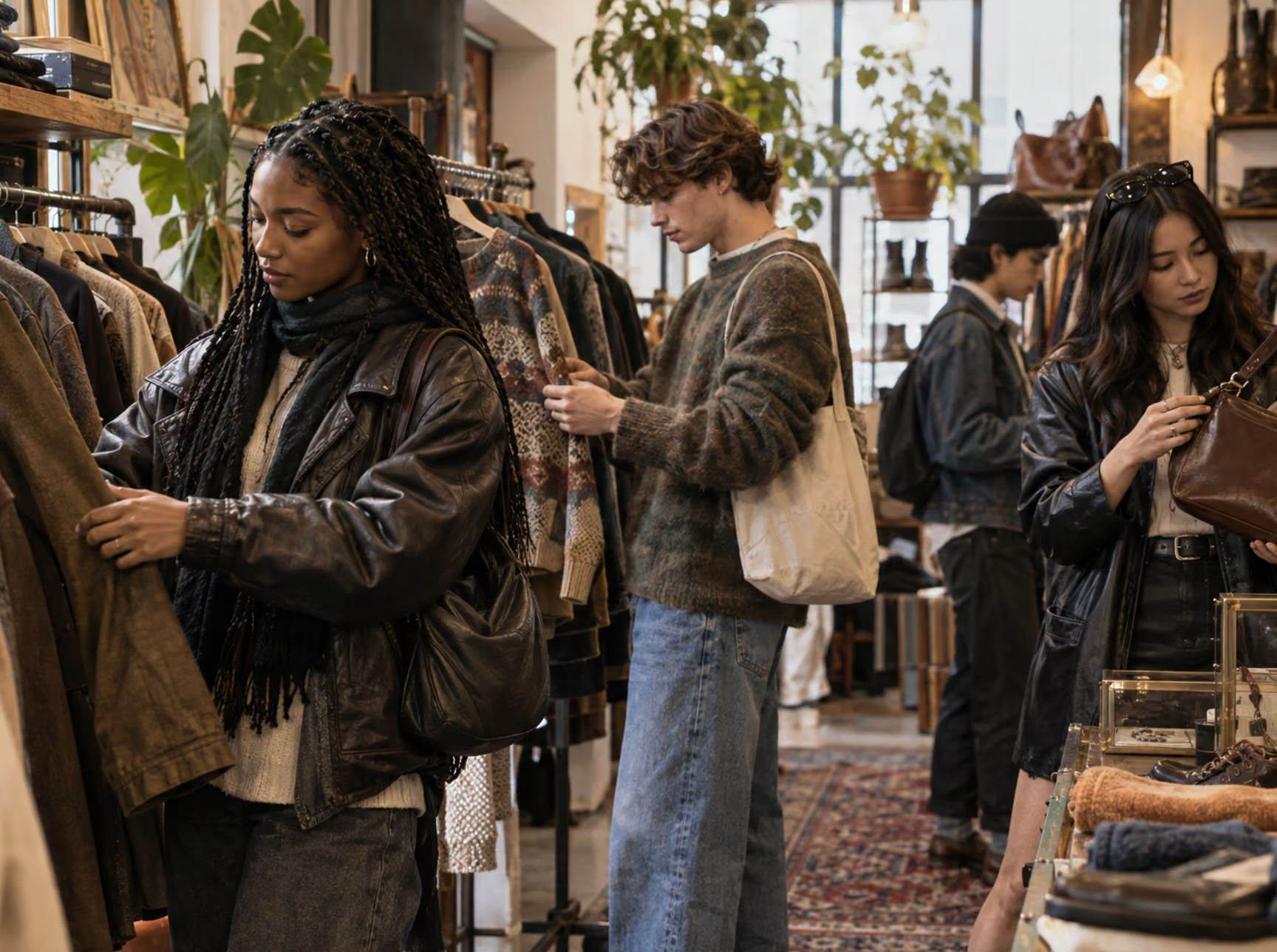
For years, fashion's relationship with younger consumers appeared straightforward: keep up with trends, create social-media buzz and attach the right logo. But Gen Z is rewriting that formula.
The generation that helped accelerate TikTok-driven microtrends and ultra-fast fashion is becoming increasingly calculated about what enters its wardrobe. Price still matters enormously, but so do fabric composition, construction, durability, versatility and cost-per-wear. At the same time, brands with decades of history, from Coach and Ralph Lauren to other American heritage labels, are finding new relevance among young shoppers.
The result is an unusual fashion landscape where affordability and quality can coexist with nostalgia and aspiration. Status has not disappeared, but younger consumers increasingly seem to want something more convincing than a famous logo.
A September 2026 Reuters report highlighted how younger consumers are becoming more methodical about finding quality clothing without overspending. Instead of judging an item simply by its price or brand, some Gen Z shoppers examine fabric percentages, stitching, garment construction, customer photographs and reviews before making a purchase.
It is essentially a value equation: How often will I wear this? How long will it last? Does the material justify the price?
That thinking reflects wider pressures on consumers. Tinuiti's 2025 Apparel Marketing Study, based on a survey of 1,007 U.S. apparel shoppers, found that rising costs were already influencing purchasing decisions. 30% said they were buying fewer products, 28% were searching for more promotions or coupons and 27% were shopping around more. Another 23% said they were buying cheaper brands in response to tariff-related price pressures.
For fashion companies, this means cheap alone may no longer be enough and expensive no longer automatically means desirable.
Gen Z's growing interest in quality should not be mistaken for a rejection of inexpensive fashion.
Tinuiti found that among Gen Z respondents, Shein narrowly surpassed Amazon as the website where they were most likely to complete an online apparel purchase. The same research found that 70% of Gen Z respondents do around half or more of their apparel shopping online, slightly ahead of millennials at 68%.
This creates an important contradiction at the heart of Gen Z fashion.
Young shoppers can simultaneously admire craftsmanship, investigate fabric quality and calculate cost-per-wear while still purchasing from an ultra-affordable platform. Rather than belonging permanently to one end of the fashion spectrum, Gen Z often mixes high and low, new and second-hand, heritage and fast fashion.
A wardrobe might contain a low-cost trending top alongside a vintage jacket, premium sneakers and a carefully chosen designer bag.
That makes perceived value more important than price category itself.
Perhaps the more surprising development is the renewed strength of American heritage fashion.
Ahead of September 2026's New York Fashion Week, Reuters reported that legacy names including Ralph Lauren and Coach were entering the season with significant momentum among younger consumers. Familiar products such as Ralph Lauren's polo shirts and cable-knit sweaters and Coach's Tabby handbag have become desirable again, demonstrating how established designs can find entirely new audiences.
Coach provides one of the clearest examples.
Parent company Tapestry reported that Coach revenue increased 24% during fiscal 2026 to approximately $6.9 billion. Across Tapestry, the company attracted around 11 million new customers during the year, with roughly 35% of new customers coming from Gen Z.
Earlier in 2026, the popularity of Coach's Tabby helped drive a particularly strong quarter. Reuters reported that Coach quarterly revenue jumped 25% to $2.14 billion, significantly exceeding analysts' expectations at the time.
This is not nostalgia confined to fashion archives. It is translating into commercial growth.
Ralph Lauren tells a similar story.
For fiscal 2026, the company recorded $8.1 billion in revenue, up 15% on a reported basis, while recruiting 6.5 million new direct-to-consumer customers during the year. The company specifically highlighted stronger engagement among younger, higher-value and less price-sensitive consumers.
Momentum continued into fiscal 2027. Ralph Lauren reported 14% year-over-year revenue growth in its first quarter, alongside a 15% increase in average unit retail prices and low-double-digit growth in global direct-to-consumer comparable sales.
Why would shoppers raised on constantly changing digital trends suddenly embrace a brand associated with decades-old polo shirts, preppy knitwear and Americana?
Part of the answer may be precisely because those products are familiar.
In an era of rapidly disappearing microtrends, timelessness can itself feel fresh.
Gen Z's relationship with fashion history is also being shaped by digital discovery.
Tinuiti found that 48% of Gen Z respondents identified TikTok as the social platform where they most often discover new apparel products. Social media was also the most common apparel discovery channel across the wider survey.
But platforms such as TikTok and Instagram do not only create new trends. They continually recycle old ones.
Prep, Y2K, quiet luxury, varsity style, vintage sportswear, old-money aesthetics and archival handbags can reappear on millions of screens within days. A piece designed decades ago can suddenly look relevant because a creator styles it differently.
This gives heritage brands an advantage that newer companies cannot easily manufacture: archives, recognizable design codes and cultural history.
Gen Z is not necessarily wearing heritage fashion the way previous generations did. It is remixing it.
Another shift is occurring in what fashion knowledge itself represents.
For previous generations, status could often be communicated through an obvious luxury logo. For younger shoppers, the flex may increasingly be knowing which vintage model to search for, which fabric lasts longer, which second-hand listing is undervalued or which heritage product is worth the investment.
Tinuiti's broader consumer findings reinforce the importance of this balance. When respondents were asked what would make them repeat customers, 46% mentioned price or value and 45% mentioned quality or durability.
That is a powerful message for retailers.
The future consumer may not necessarily ask, “Is this luxury?”
They may ask: “Is this worth it?”
Gen Z is frequently portrayed as unpredictable because its trends move quickly. But underneath those changes, its purchasing logic is becoming clearer.
Young consumers want accessibility without feeling disposable, quality without unjustifiable prices, individuality without abandoning recognizable brands and nostalgia without looking outdated.
That helps explain why inexpensive platforms can remain enormously popular while heritage companies simultaneously enjoy renewed momentum.
The winners will not necessarily be the cheapest or the most expensive brands.
They will be the companies capable of demonstrating real value, whether that comes from affordability, craftsmanship, cultural relevance, versatility, durability or emotional connection.
Fashion has spent decades teaching consumers that price and prestige define desirability.
Gen Z may be rewriting the equation.
In the emerging wardrobe, a $20 discovery, a vintage find and a carefully chosen Coach or Ralph Lauren piece can comfortably exist side by side.
And that may be the clearest signal of where fashion is heading: value is becoming the new status.
For questions or comments write to contactus@bostonbrandmedia.com



-v3.jpg)


-v3-02.jpg)