Stay informed with our newsletter.
.webp)


EN





China is facing mounting economic pressure as the Iran war disrupts global energy and trade systems. Rising oil prices are increasing production costs, fueling inflation risks, and squeezing profits. Disruptions in key shipping routes like the Strait of Hormuz threaten energy security and supply chains. At the same time, weakened global demand and investment uncertainty are slowing exports and growth, compounding China’s existing economic challenges and exposing vulnerabilities in its reliance on Middle Eastern energy.
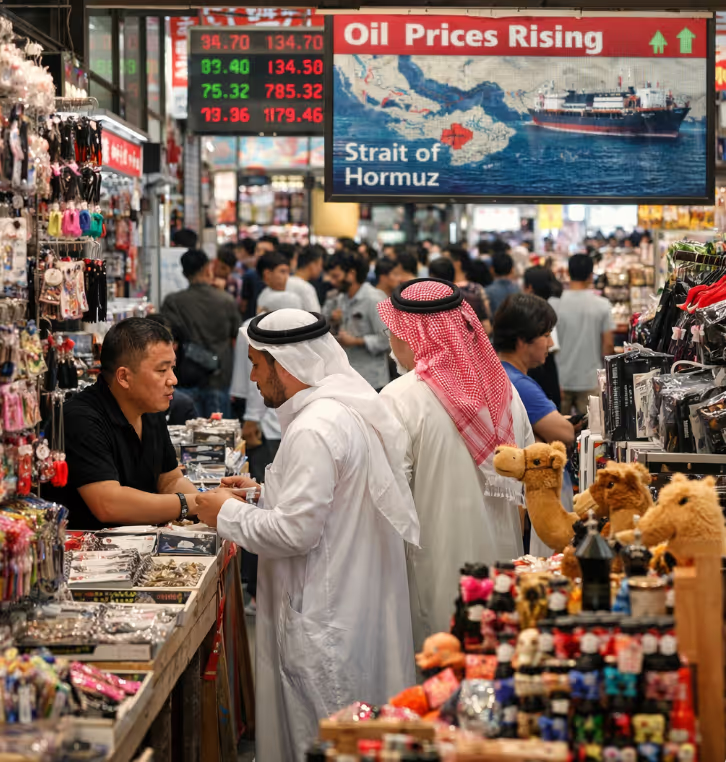
To understand how the Iran war is rippling through China’s economy, look no further than Yiwu, a vast trading powerhouse in Zhejiang province where everything from hair clips to toys is sold to buyers from around the world.
The city thrives on exports, and its welcome is impossible to miss, boldly declaring itself the “world’s capital of small commodities.” Among its most valued visitors are buyers from Gulf nations, who have helped fuel a surge in trade. Over five years, exports to the Middle East have more than doubled, surpassing $120 billion in 2025, with shipments to the UAE and Saudi Arabia alone rising sharply at the start of the year.
But as the Iran conflict drags into another week, that momentum has abruptly stalled. Flights have been disrupted, leaving fewer buyers arriving and many already in Yiwu scrambling to return home. Communication has also become difficult, particularly with Iranian clients, as widespread internet outages cut off contact. Some reports even suggest individuals have returned home to join national defense efforts.
Orders may still be placed digitally, but Chinese suppliers especially in electronics are growing increasingly cautious. For many, the financial risks no longer justify continuing business under current conditions. Take air conditioners as an example. China exported millions of units to the Middle East last year, accounting for a significant portion of total shipments. Now, demand is showing signs of weakening, with early data suggesting a noticeable drop in overseas orders this month.
Logistics have become a major challenge. Shipping costs to the Persian Gulf have surged, insurance premiums have skyrocketed, and additional war-related charges are pushing costs to unsustainable levels for exporters.
At the same time, manufacturers are grappling with uncertainty around raw materials like copper and aluminum. Prices initially spiked amid fears of supply disruptions but have recently fallen as concerns about a global economic slowdown intensify. Even modest increases in input costs can significantly erode profit margins for major appliance makers. Yiwu, in many ways, reflects a broader risk facing China. A prolonged conflict threatens global demand, one of the few strong pillars supporting its economy. As energy prices rise worldwide, consumers are spending less, weakening export markets.
If exports falter, China could face deeper structural challenges, including excess production capacity, aggressive price competition domestically, and shrinking corporate earnings. Financial markets are beginning to reflect these concerns after initially remaining steady. Within China, there is growing debate about the war’s implications. In the short term, policymakers must manage rising energy pressures. While the country’s strategic oil reserves offer some protection, the longer-term outlook remains uncertain and divisive among analysts.
Some argue the conflict could indirectly benefit China by shifting US military focus away from Asia and reinforcing China’s position in energy-intensive sectors like AI. However, this optimism may be misplaced. China has recently benefited from strong global demand, allowing it to offset trade tensions and maintain export growth. This has given policymakers room to take a measured approach to domestic economic challenges.
That cushion could quickly disappear if the global economy slips into recession. Despite political narratives to the contrary, conflict rarely produces clear winners and the economic consequences can be far-reaching.
For questions or comments write to contactus@bostonbrandmedia.com



-v3.jpg)


-v3-02.jpg)