Stay informed with our newsletter.
.webp)


EN





A World in Flux: The Five Defining Global Themes Shaping 2026 explores how geopolitical tensions in the Middle East, rising inflation and interest rate uncertainty, and ongoing energy shocks are reshaping the global landscape. At the same time, rare cultural alignment through events like Eid and a strong rebound in entertainment and sports highlight resilience and connectivity. Together, these trends reflect a complex, rapidly evolving world requiring adaptability, strategic foresight, and global awareness.
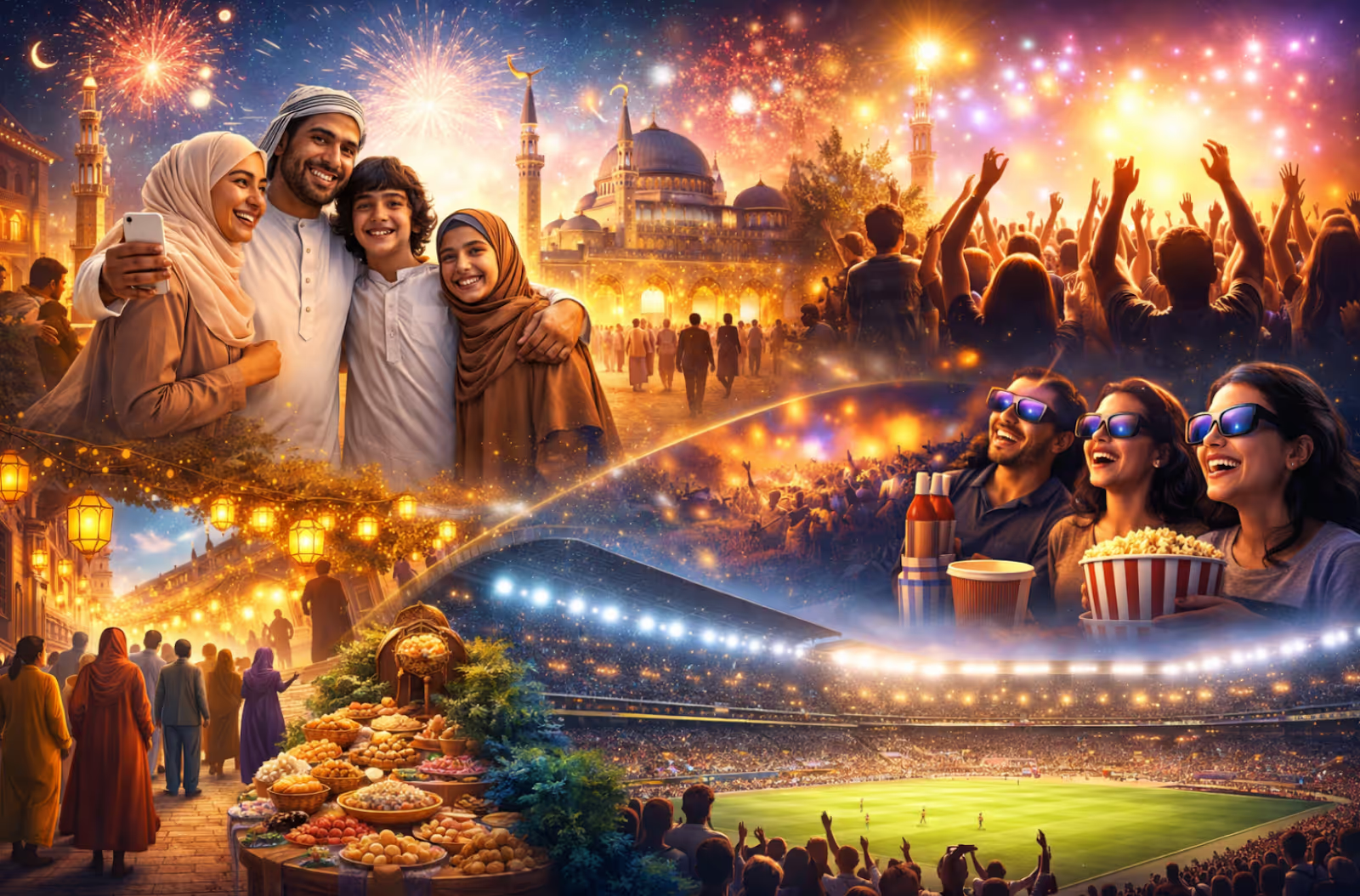
As 2026 unfolds, the global landscape is being reshaped by a convergence of geopolitical tensions, economic uncertainty, energy disruptions, cultural alignment, and a resurgence in lifestyle sectors. Together, these forces are not only influencing markets and policymaking but also redefining how individuals and institutions navigate an increasingly interconnected world.
The Middle East has once again emerged as the epicenter of global geopolitical risk. Escalating tensions involving key players such as Iran, Israel, and the United States have heightened concerns over regional stability and global security. Strategic infrastructure, particularly energy facilities, has become a focal point, with recent disruptions underscoring vulnerabilities in global supply chains.
The implications are far-reaching. Nearly 30% of the world’s oil supply passes through the Strait of Hormuz, making any instability in the region a direct threat to global energy security. Financial markets have responded with increased volatility, while governments are reassessing defense and foreign policy strategies.
For multinational corporations, especially in energy, logistics, and finance, geopolitical risk management has shifted from a peripheral concern to a core strategic priority.
After a brief period of stabilization in 2025, inflationary pressures are resurfacing in 2026, driven largely by energy price shocks and supply chain disruptions. Central banks across major economies, including the U.S. Federal Reserve, the Bank of England, and the European Central Bank, are now facing renewed pressure to tighten monetary policy.
In the UK, for instance, economists are forecasting up to two additional interest rate hikes in 2026 to combat inflation. Similarly, U.S. policymakers remain cautious, balancing economic growth with price stability.
Globally, inflation remains uneven but persistent:
The uncertainty surrounding interest rates is impacting investment decisions, slowing capital flows, and increasing borrowing costs for businesses. For industries reliant on financing, such as real estate, infrastructure, and startups, the cost of capital is becoming a defining challenge.
Energy has become the single most influential variable shaping the global economy in early 2026. Oil prices have surged beyond $110 per barrel, with some forecasts suggesting further increases if geopolitical tensions persist.
Natural gas markets, particularly in Europe, have also experienced sharp volatility, with prices rising by over 20–25% in recent weeks. This has triggered a cascade of effects across industries:
The energy shock is also accelerating the global transition toward renewables. Governments and corporations are doubling down on investments in solar, wind, and hydrogen, recognizing that long-term energy security depends on diversification.
However, the transition is uneven. Fossil fuels continue to dominate, accounting for approximately 80% of global energy consumption, highlighting the complexity of shifting to a sustainable energy future.
Amid geopolitical and economic turbulence, a unique cultural phenomenon has brought a sense of unity: the global alignment of Eid-ul-Fitr celebrations in 2026. Countries across the Middle East, North Africa, Europe, and parts of Asia observed Eid on the same day, an occurrence that is relatively rare due to variations in moon sighting practices.
This synchronization reflects broader trends in globalization and digital connectivity. With real-time communication and coordinated astronomical calculations, communities worldwide are increasingly aligned in cultural and religious observances.
Eid-ul-Fitr is celebrated by over 1.9 billion Muslims globally, making it one of the largest synchronized cultural events in the world. Beyond its religious significance, it also has economic implications, driving spikes in retail, travel, and hospitality sectors.
This moment of alignment serves as a reminder that even in times of division, shared traditions can foster global cohesion.
Following years of disruption caused by the pandemic and economic uncertainty, the global entertainment and sports industries are experiencing a robust rebound. Consumer demand for experiences, both digital and physical, is surging.
The global entertainment market is projected to exceed $3 trillion by 2027, driven by streaming platforms, gaming, and live events. Meanwhile, international sporting events are drawing record audiences, with Asia emerging as a key hub for global tournaments.
Key trends include:
For brands, this resurgence presents significant opportunities to engage with audiences through sponsorships, content partnerships, and experiential marketing.
The defining themes of 2026, geopolitical instability, economic uncertainty, energy volatility, cultural alignment, and lifestyle resurgence, highlight the complexity of the modern global environment.
For businesses, policymakers, and individuals alike, adaptability is no longer optional. Strategic foresight, resilience, and innovation will be critical in navigating these interconnected challenges.
In a world where disruption is constant, those who can anticipate change and respond proactively will not only survive, but lead.
For questions or comments write to contactus@bostonbrandmedia.com



-v3.jpg)


-v3-02.jpg)