Stay informed with our newsletter.
.webp)


EN





Record-breaking heatwaves and widespread wildfires across the Southern Hemisphere signal an intensifying climate crisis. Countries including Argentina, Chile, Australia, and South Africa are experiencing extreme temperatures, prolonged droughts, and destructive fires that have caused loss of life, environmental damage, and significant economic disruption. Scientists link these escalating events to global warming and shifting climate patterns, warning that such extremes may become more frequent and severe without urgent action to address climate change.
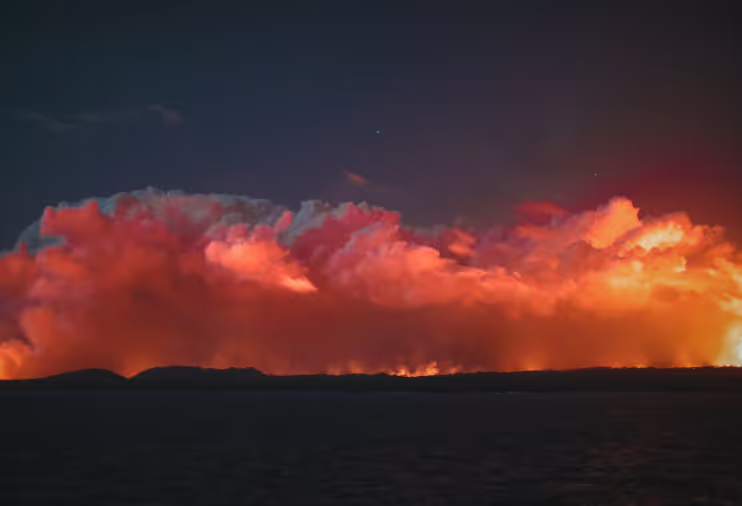
At the start of 2026, vast regions across the Southern Hemisphere are facing an alarming climate crisis. Scientists have reported exceptional heatwaves and widespread wildfire outbreaks in Argentina, Chile, Australia, and South Africa, with temperatures nearing historic highs. Entire communities have been evacuated, ecosystems devastated, and economies strained under the weight of climate extremes that experts say are becoming more frequent and more intense due to global warming.
The events unfolding across these continents are not isolated disasters. Instead, they reflect a broader pattern of escalating climate volatility driven by rising greenhouse gas emissions and shifting atmospheric systems.
Meteorological agencies in multiple Southern Hemisphere countries have recorded temperatures several degrees above seasonal averages. In parts of Argentina and Chile, thermometers have climbed close to or beyond previous records, intensifying drought conditions and turning forests and grasslands into tinderboxes.
Australia, no stranger to extreme summer heat, has once again experienced scorching conditions reminiscent of its devastating “Black Summer” fires of 2019–2020. Prolonged heatwaves have dried vegetation, lowered soil moisture, and heightened the risk of ignition from lightning strikes or human activity.
South Africa has also endured unusually high temperatures, particularly in the Western Cape and Northern Cape provinces. These regions, already prone to drought, have seen vegetation desiccate rapidly, fueling fast-moving fires that are difficult to contain.
Scientists emphasize that while heatwaves have always occurred naturally, their frequency, duration, and intensity are increasing due to climate change. Warmer baseline global temperatures mean that heat extremes now begin from a higher starting point, amplifying their severity.
As temperatures soar, wildfire outbreaks have followed with devastating consequences. Firefighters across Argentina and Chile have battled massive blazes sweeping through rural communities, farmland, and protected forest areas. Thousands of hectares of land have been scorched, displacing families and threatening critical infrastructure.
In Australia, bushfires have erupted across multiple states, forcing emergency evacuations and stretching firefighting resources thin. Some fires have spread rapidly due to strong winds and dry conditions, jumping containment lines and advancing toward residential areas.
South Africa has reported multiple wildfire clusters, particularly in mountainous and forested areas. Fire crews, supported by aerial firefighting units, have worked tirelessly to contain the blazes, but difficult terrain and persistent heat have hampered efforts.
The human toll is mounting. Authorities in affected countries have confirmed fatalities, injuries, and widespread property damage. Homes, farms, and businesses have been destroyed, while smoke pollution has blanketed major cities, triggering health advisories and hospital admissions for respiratory conditions.
Beyond the immediate destruction of property, the ecological impact of these fires is profound. Forests that took decades or centuries to grow have been reduced to ash. Wildlife habitats have been destroyed, leaving countless animals dead or displaced.
In Chile and Argentina, native forest ecosystems that support unique species face long-term recovery challenges. Australia, home to some of the world’s most distinctive biodiversity, is once again witnessing large-scale habitat loss. Conservationists warn that repeated fire events can push vulnerable species closer to extinction.
In South Africa, fires in fynbos ecosystems, biodiversity hotspots known for their unique plant life, pose significant risks. While some native plants are adapted to periodic fires, extreme frequency and intensity can disrupt natural regeneration cycles.
Scientists caution that as climate change accelerates, ecosystems may struggle to recover between fire seasons. Repeated stress can alter landscapes permanently, transforming forests into shrublands or grasslands and reducing biodiversity.
The financial toll of these climate disasters is enormous. Governments are allocating emergency funds for firefighting operations, disaster relief, and rebuilding efforts. Insurance claims are expected to reach billions of dollars across affected countries.
Agriculture has been hit particularly hard. Heatwaves and fires have damaged crops, livestock, and irrigation systems. Farmers in Argentina and Australia are reporting reduced yields due to prolonged drought and heat stress, compounding global concerns about food security.
Tourism, a major economic driver in regions like Chile’s Patagonia, Australia’s coastal areas, and South Africa’s Western Cape, has also suffered. Visitors have canceled trips amid safety concerns and hazardous air quality, resulting in lost revenue for local businesses.
Infrastructure damage, including power lines, roads, and communication networks, adds to recovery costs and disrupts daily life. In some areas, rolling blackouts have occurred due to strain on energy systems during peak heat demand.
Climate scientists are clear: while no single wildfire or heatwave can be attributed solely to climate change, the broader pattern aligns with global warming projections. Rising concentrations of greenhouse gases have increased average global temperatures, intensifying heat extremes and altering weather systems.
Phenomena such as El Niño can further amplify heat and dryness in parts of the Southern Hemisphere. When combined with long-term warming trends, these natural cycles can create especially severe conditions.
Research shows that warmer air holds more moisture, leading to complex weather patterns, intense rainfall in some regions and severe drought in others. In fire-prone areas, prolonged dry spells set the stage for explosive wildfire seasons.
Climate models predict that without significant reductions in emissions, heatwaves will become more frequent, longer-lasting, and more intense. Fire seasons are also expected to lengthen, placing additional strain on emergency services and communities.
Extreme heat and wildfire smoke pose serious health risks. Prolonged exposure to high temperatures can lead to heat exhaustion, heatstroke, and cardiovascular complications. Vulnerable populations, including the elderly, children, and outdoor workers, are at particular risk.
Wildfire smoke contains fine particulate matter that can penetrate deep into the lungs, exacerbating asthma and other respiratory conditions. Hospitals in affected regions have reported increased admissions related to breathing difficulties and heat-related illnesses.
Public health authorities have issued warnings advising residents to stay indoors, remain hydrated, and avoid strenuous outdoor activity during peak heat hours. Cooling centers have been opened in some communities to provide relief.
Despite the scale of the crisis, communities across the Southern Hemisphere have demonstrated resilience and solidarity. Volunteer firefighters, local charities, and community groups have mobilized to support evacuees and provide essential supplies.
Governments are increasingly investing in early warning systems, improved firefighting technologies, and climate adaptation strategies. Controlled burns, forest management programs, and stricter building codes are being implemented to reduce future risks.
However, experts stress that adaptation alone is not enough. Without meaningful global action to reduce greenhouse gas emissions, the underlying drivers of extreme heat and wildfire intensity will persist.
The record heatwaves and wildfires sweeping across Argentina, Chile, Australia, and South Africa serve as a stark reminder of the escalating impacts of climate change. The convergence of extreme heat, prolonged drought, and large-scale fires highlights vulnerabilities in infrastructure, ecosystems, and emergency preparedness.
These events are part of a broader global trend. In recent years, extreme weather, from hurricanes to floods to heat domes, has intensified across continents. The Southern Hemisphere’s current crisis underscores that climate change is not a distant threat but an immediate reality.
As governments prepare for international climate negotiations later this year, the urgency for coordinated action is mounting. Reducing emissions, transitioning to renewable energy, and strengthening climate resilience will be critical steps in mitigating future disasters.
The fires may eventually be extinguished, and temperatures will fluctuate with the seasons. But the message from scientists is clear: unless global warming is addressed decisively, such extreme events could become the new normal, reshaping landscapes, economies, and lives across the planet.
For questions or comments write to contactus@bostonbrandmedia.com



-v3.jpg)


-v3-02.jpg)