Stay informed with our newsletter.
.webp)


EN





Nepal is empowering its teachers to bring Media and Information Literacy (MIL) into classrooms in ways that align with local culture, languages, and community needs. By equipping educators with practical tools and context-based training, the initiative helps students develop critical thinking, digital awareness, and responsible media habits. This localized approach ensures MIL is more relatable, accessible, and impactful, ultimately strengthening informed decision-making and digital resilience across Nepal’s youth.
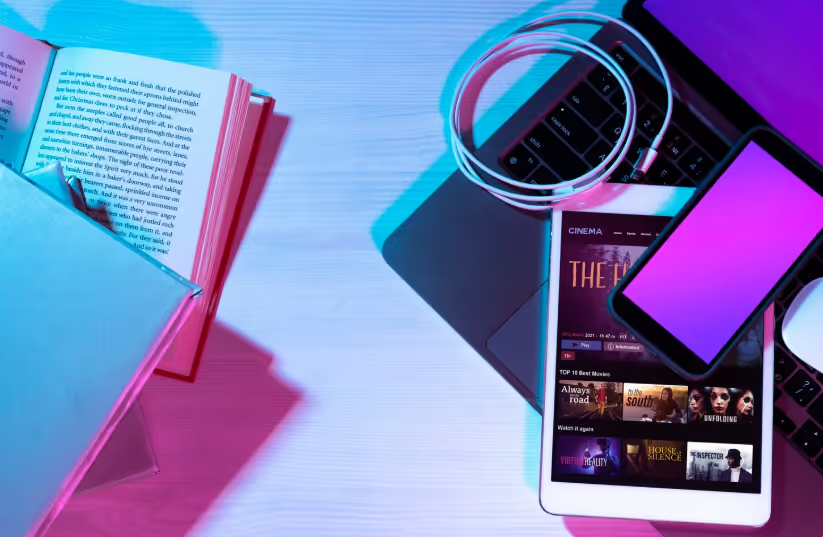
UNESCO’s latest global review, MIL for All: Closing the Gaps (2025), reveals that many nations, including Nepal, are still struggling to weave evaluative, participatory, and ethical MIL skills into their national curriculum and teacher training systems.
In Nepal, where education planning and delivery now sit largely with local governments under federalism, these challenges are even more pronounced on the ground. Local education offices and Education Training Centres are expected to guide schools through today’s fast-changing information environment, yet they frequently operate with limited tools, training, and institutional backing.
To help close these gaps, UNESCO is working closely with national and municipal partners to lay the groundwork for meaningful MIL adoption. The Framework on MIL Integration in Local Education Planning (2024), designed with eight municipalities across seven provinces, offered practical ways to embed MIL into school governance, curriculum processes, and teacher development. Still, translating these ideas into real-world practice remains a complex task.
A three-day workshop held from 20–22 November 2025 gathered over 30 representatives from seven municipalities, provincial ETCs, and Social Development Committees. Its purpose was to equip these local actors with the strategies and confidence needed to localize MIL, shifting from basic awareness to on-the-ground implementation. The sessions helped strengthen institutional and teaching capacities, positioning MIL as a critical competency for nurturing analytical thinking, digital safety, and responsible citizenship.
As Nepal continues to decentralize its education system, local institutions play a decisive role in helping young people navigate overwhelming volumes of information, and UNESCO reaffirmed its commitment to supporting this journey. One participant noted that the training opened her eyes to issues she hadn’t deeply considered before, from misinformation to hate speech, and that it empowered her to introduce these discussions in her classroom with greater clarity and purpose.
Through hands-on activities, participants explored how to adapt global MIL standards to local contexts, identify curriculum-level opportunities, and design age-appropriate teaching methods. These exercises helped bridge the gap between planning and implementation, offering practical solutions relevant to Nepal’s everyday teaching environments.
For many attendees who had previously joined local education planning workshops, this session added the missing link, showing how MIL connects directly to real classroom challenges such as social media habits, digital safety, and teacher involvement in curriculum decisions. They expressed newfound clarity on how local curriculum design can meaningfully embed MIL for both educators and learners.
Given rising concerns about hate speech, the programme also included focused discussions on building safer, more respectful learning spaces. Using UNESCO’s handbook on confronting hate speech through education, participants examined how harmful ideas can surface in school settings and how teachers can create a culture of empathy, inclusion, and critical inquiry.
Key achievements from the workshop included draft MIL action plans prepared by municipalities and ETCs. These plans mapped local challenges and set out feasible steps for integrating MIL. A significant result was the curriculum mapping exercise, which helped pinpoint MIL entry points in existing subjects, particularly in Social Studies for Grades 6–12 and suggest practical classroom activities such as analyzing misinformation and fostering respectful online interactions.
As one leader highlighted, teachers need stronger support systems to help students recognize and challenge discriminatory language both inside and outside school. Strengthening educators ultimately leads to more inclusive and respectful learning environments.
The workshop also served as a platform for reflection, dialogue, and planning, allowing participants to envision how MIL could take root in their local education systems. Another municipal representative emphasized the importance of enhancing MIL competencies to improve teaching and learning, expressing appreciation for UNESCO’s continued partnership.
While the workshop marked an important beginning, participants agreed that long-term success depends on concrete follow-up initiatives. These include developing standardized MIL training modules, mentoring programmes for local trainers, ready-to-use teaching resources, and brief orientations for municipal leaders. With sustained cooperation between local governments, ETCs, and national bodies, these efforts can help embed MIL more firmly across Nepal’s classrooms.
MIL remains a cornerstone of essential 21st-century skills, especially critical thinking and digital resilience. The workshop underscored the urgency of moving from policy to practice by empowering those who shape the country’s learning environments. The path ahead lies in strengthening training systems, expanding practical resources, and continuing collaborative efforts to ensure every learner benefits from strong Media and Information Literacy education.
For questions or comments write to contactus@bostonbrandmedia.com
Source: unesco



-v3.jpg)


-v3-02.jpg)