Stay informed with our newsletter.
.webp)


EN





Chinese tea brands are rapidly expanding into international markets, particularly the United States, as they introduce bubble tea and fruit-infused beverages to global consumers. Driven by strong demand from younger audiences and growing interest in innovative, visually appealing drinks, these brands are localizing flavors and concepts to suit overseas tastes. Their expansion highlights rising cross-border opportunities in the food and beverage sector and signals tea’s growing role in global drinks innovation.
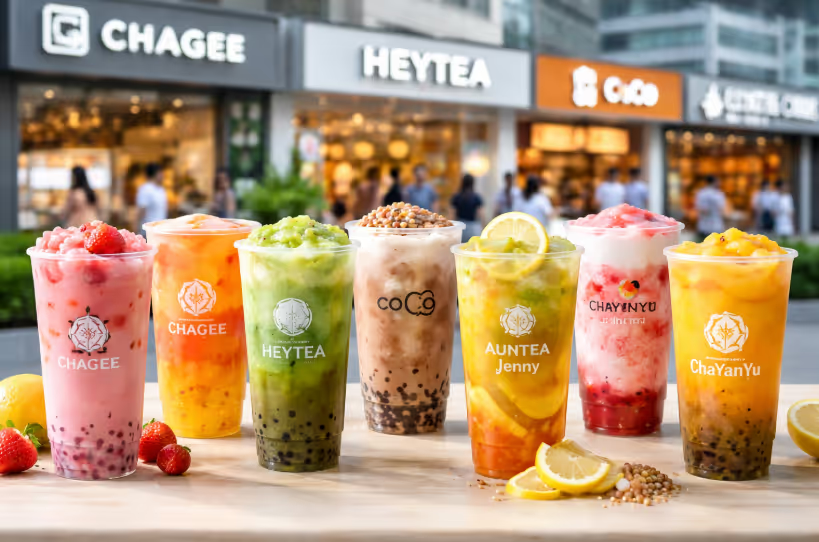
In recent years, Chinese tea brands have begun to make bold moves beyond Asia, targeting new and lucrative markets around the world. Most notable among these is their expansion into the United States, a country long dominated by coffee culture but increasingly open to diverse beverage experiences. From fruit-infused “new-style” teas to bubble tea designed for social media appeal, Chinese tea brands are reshaping global tastes and signaling a broader shift in the global food and beverage landscape.
The evolution of tea consumption in China has been dramatic. Traditional tea, steeped leaves and centuries-old rituals, has given rise to a vibrant “new-style” tea drink industry combining fresh fruit, milk, cheese foam, and creative flavors that appeal to younger consumers. By 2024, China’s new-style tea market had grown to a value exceeding 350 billion yuan (about USD 48.5 billion), and it’s projected to expand further in the coming years. This wave of innovation laid the foundation for outward expansion as local brands saturated the domestic market and looked abroad for growth.
Chinese tea brands are no longer confined to Asia. Outlets can now be spotted in cities across Europe, Australia, the Middle East, and increasingly, North America. Companies such as Heytea, Chagee, coco Fresh Tea & Juice, Molly Tea, and Auntea Jenny are among those pioneering this global push.
The United States presents both an opportunity and a challenge for Chinese tea brands. Traditional American beverage culture has long favored coffee and soda, but recent years have seen a surge in interest in alternatives, particularly among younger consumers. Bubble tea and fruit-tea drinks have become popular with Gen Z and Millennials, driven in part by social media virality and the desire for visually appealing, customizable drinks.
Chinese brands are capitalizing on this trend. For instance, Bobobaba, a concept launched by Ningji Lemon Tea co-founder Amanda Wang, was designed specifically to cater to American tastes with sweeter profiles and bright, Instagram-friendly presentations. To prepare for the U.S. launch, Wang made multiple research trips to understand local preferences and business dynamics, a recognition that the American market requires careful adaptation.
Other brands such as Chagee Tea House, Chahalo, Molly Tea, and Auntea Jenny have also opened either flagship stores or announced plans to expand in the U.S. Mixue, known globally for its fruit teas and extensive store network, secured a long-term lease in New York City, underscoring the growing confidence among Chinese beverage companies that American consumers are ready for new tea-centric experiences.
One of the critical strategies behind this expansion is product localization. Chinese brands are not merely transplanting their domestic products to foreign markets; they are adjusting flavor profiles, branding, and service models to better match local preferences.
For example, Bobobaba’s U.S. menu is crafted to be sweeter and more colorful than its Chinese counterpart, aimed at consumers accustomed to bold and sugary beverages. This localized approach contrasts with the more subtle flavors often found in traditional Chinese tea drinks, representing a deliberate effort to bridge cultural tastes.
Another facet of this strategy is a focus on aesthetics and social media appeal. Vibrant drinks with fruit toppings, boba pearls, and creative naming schemes are designed to generate shareable moments, a modern marketing tactic that has helped bubble tea culture flourish globally. It’s a clever way to build brand awareness among millennials and Gen Z consumers who rely heavily on platforms like Instagram and TikTok for lifestyle inspiration.
Despite the buzz, expansion into markets like the U.S. isn’t without challenges. Setting up operations involves navigating complex regulatory environments, logistics, and cultural differences. For many Chinese brands, opening a store in the U.S. can take months of preparation and coordination, in stark contrast to the relatively fast process they’re accustomed to in China.
There’s also the task of building brand recognition from scratch. Unlike in China, where brands like Heytea and Auntea Jenny are household names, they remain unfamiliar to many American consumers outside Asian-American communities. Educating consumers about tea culture and positioning tea as an alternative to coffee, especially in regions with a deeply entrenched coffee tradition, requires sustained marketing and local engagement.
Yet, for those willing to invest in these efforts, the potential upside is significant. The U.S. market remains one of the largest consumer economies in the world, and its appetite for innovative beverages continues to grow. Younger consumers, in particular, are increasingly open to trying new drinks that offer novelty and cultural appeal.
The expansion of Chinese tea brands isn’t limited to the U.S. Many companies have already established a presence across Southeast Asia, Australia, and Europe. These markets often serve as stepping stones, where brands can refine their international playbooks before tackling more competitive arenas like North America.
For instance, Heytea, credited with pioneering cheese tea, now operates thousands of stores worldwide, including in major Western cities such as New York. The brand’s executive leadership has even suggested that the U.S. market could eventually rival China in terms of size and consumer demand, reflecting the enormous long-term opportunity perceived by industry leaders.
Other Chinese brands have used digital channels and e-commerce to increase their global footprint without requiring physical store networks. Retail tea products offered online in North America allow brands to build awareness and test consumer response before investing in brick-and-mortar expansions. This dual strategy of online and offline presence helps reduce risk and accelerates brand penetration.
The rise of Chinese tea brands internationally represents more than a business expansion, it’s a cultural exchange that introduces global consumers to modern interpretations of Chinese tea culture. While classic tea traditions remain treasured, the innovative blend of fruit tea, milk tea, and creative tea-based beverages provides a fresh lens through which global diners experience China’s beverage evolution.
This movement aligns with broader trends in the global food and beverage industry, where consumers are increasingly looking for unique flavors, culturally diverse offerings, and experiences that go beyond the familiar. Chinese tea brands with their creativity, strong supply chains, and commitment to innovation are well-positioned to capture this market demand.
Looking ahead, success in the U.S. and other Western markets will likely hinge on a balance of localization, cultural resonance, and strategic branding. As more brands open stores, develop localized products, and engage with communities abroad, tea culture may well take its place alongside coffee as a staple of global beverage consumption.
In summary, the expansion of Chinese tea brands into the U.S. and other international markets reflects a dynamic blending of innovation, culture, and ambitious global strategy. With strong consumer interest in novel beverages and tea’s growing popularity among younger drinkers, these brands are brewing not just drinks but the future of global tea culture.
For questions or comments write to contactus@bostonbrandmedia.com



-v3.jpg)


-v3-02.jpg)